If you have tried painting traditional French tips on small or natural nails, you know the frustration: standard thick white bands visually slice your nail bed in half, making short fingers look blunt and stubby. But mastering french tips on short nails at home is entirely possible when you switch to the modern micro French tip.
Instead of occupying a wide band across the top of your nail, a micro French hugs the free edge with an ultra-fine, razor-thin smile line (under 1 millimeter wide). This subtle curve frames the nail plate cleanly, creating an optical illusion of longer, slender fingers—the same technique we broke down in our guide on how to make short nails look longer.
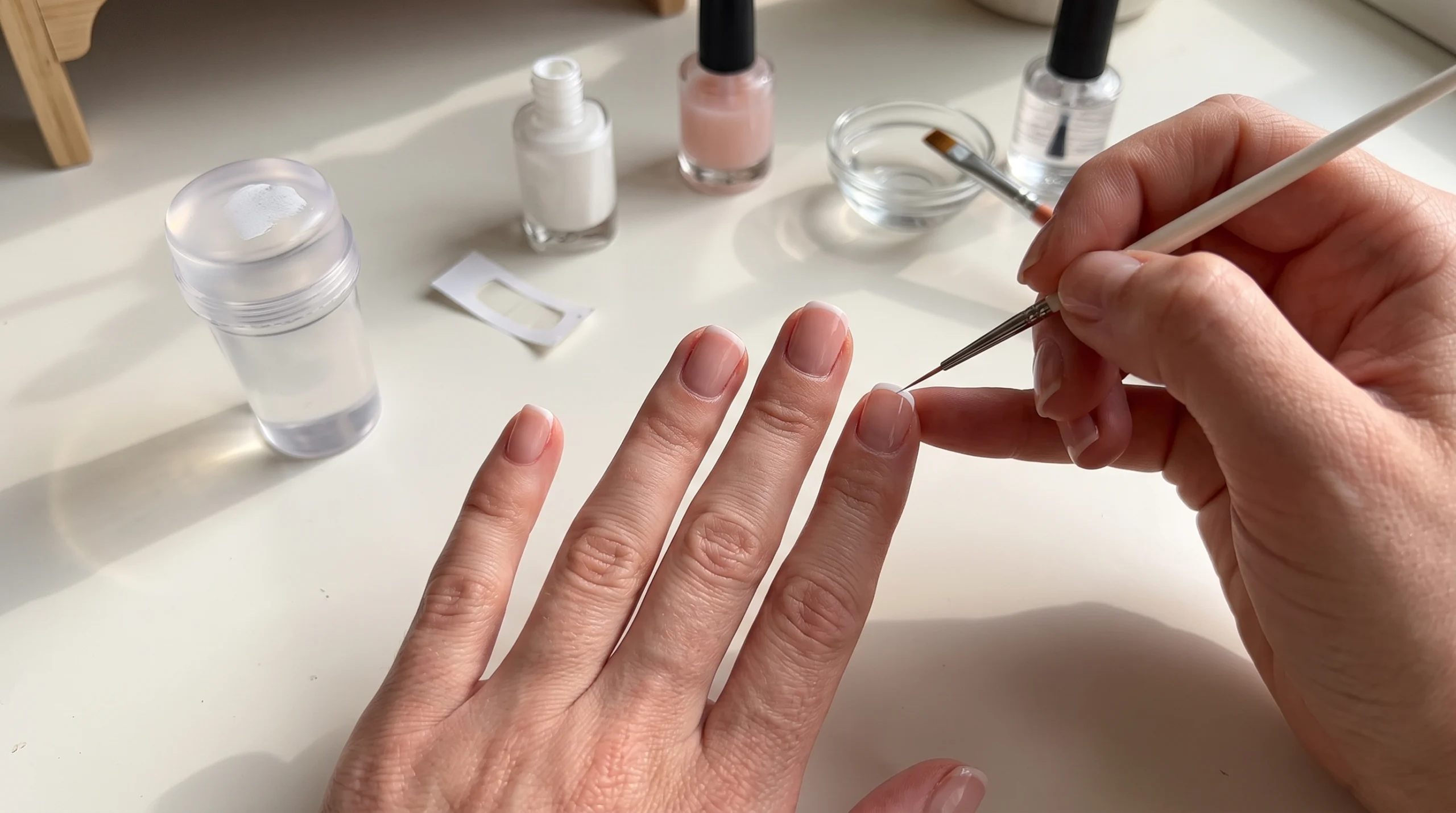
You do not need steady surgeon hands or expensive salon appointments to achieve crisp lines. Below, we break down the essential tool kit and 5 foolproof DIY hacks professional nail artists use to paint salon-grade micro French tips on short natural nails at home.
Essential DIY Kit for Short French Tips
Before jumping into the techniques, set up these four inexpensive tools on your manicure station:
- A Silicone French Tip Stamper: The quickest shortcut for instant, symmetrical micro curves across both hands.
- A 9mm to 11mm Long-Bristle Striper Brush: Standard polish brushes from the bottle are far too thick; long, slender synthetic bristles maintain tension and paint continuous lines in one stroke.
- Flat Angled Clean-Up Brush + Pure Acetone: Your safety net to carve, sharpen, and erase wobbles before curing or drying.
- A Camouflaging Builder Gel (BIAB) or Sheer Milky-Nude Base: The secret weapon to hide your natural white free edge so you can place your micro tip higher up.
5 Easy Hacks to Paint French Tips on Short Nails at Home
Hack 1: The Silicone Stamper Technique (The 2-Second Smile Line)
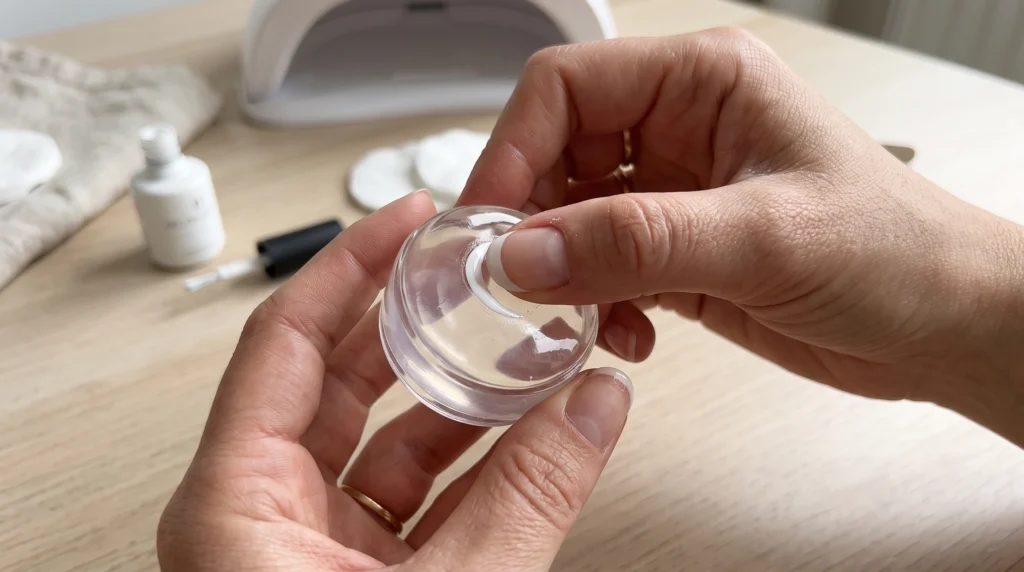
The silicone nail stamper is the ultimate game-changer for beginners struggling to paint their non-dominant hand. It uses flexible surface tension to wrap color evenly around short nail edges without freehand drawing.
- How to do it: Paint a thin, even coat of your tip color (classic white, chocolate brown, or rich burgundy) directly onto the silicone stamper cushion. Tilt your finger at a 45-degree angle, and gently press the raw free edge of your nail into the edge of the cushion, pushing just 1 to 2 millimeters deep.
- Why it works on short nails: The silicone squishes naturally around your fingertip contour, creating a uniform micro-smile line across all ten fingers in seconds.
- Pro Tip: Do not push your nail straight down into the center of the stamper, as this pushes polish under your nail folds. Always press diagonally at an angle.
Hack 2: The Long-Bristle Striper Brush Pivot
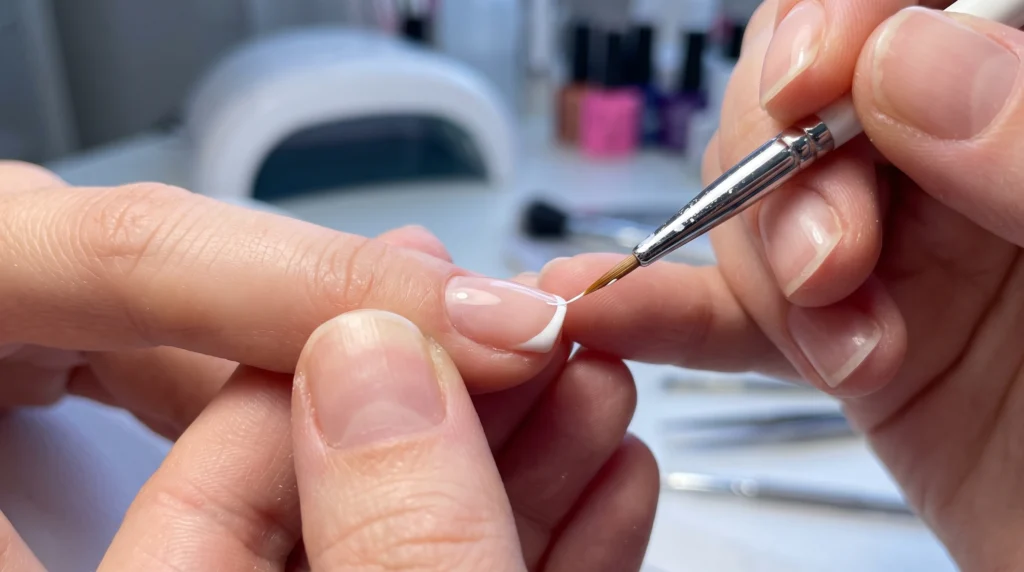
If you prefer hand-painted precision over stampers, throwing away the standard bottle brush is step number one. Professional detailer brushes (9mm to 11mm) allow you to pivot your finger rather than moving your hand.
- How to do it: Anchor your painting hand on a flat table. Load a tiny bead of polish onto the lower half of your striper brush. Instead of dragging the brush across your nail, hold the brush completely still at a slight angle and slowly roll your finger from one sidewall to the other.
- Why it works on short nails: Rotating your finger keeps the pressure steady, eliminating hand tremors and producing a clean, hairline arc without choppy stop-and-start marks.
- DIY tip: Wipe the brush bristles almost dry before painting. On small nail beds, excess lacquer floods the cuticle sidewalls instantly.
Hack 3: The Camouflaging BIAB Base Trick
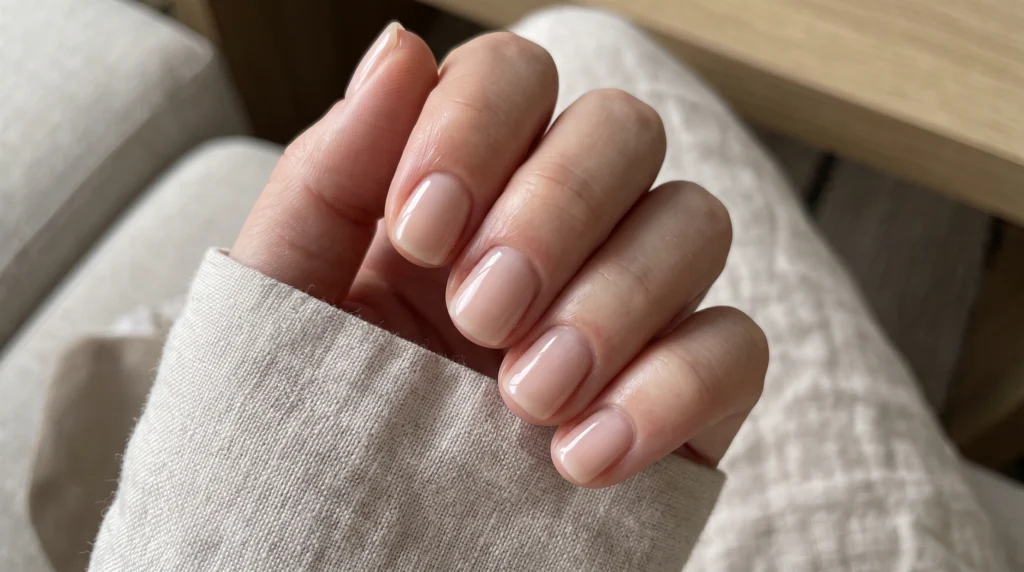
The biggest struggle with short nails is that your natural white smile line (the hyponychium line) is often uneven, crooked, or sits too low on your fingertip. Painting a sheer clear base leaves this visible, ruining your micro French proportions.
- How to do it: Apply two thin coats of a semi-opaque, skin-toned builder gel (BIAB) or a milky-pink smoothing base coat. Cure or dry completely before painting your tip color.
- Why it works on short nails: The semi-opaque pigment acts like foundation makeup for your nail beds, completely blurring out your natural smile line. This allows you to paint your micro tip right at the very tip of your finger, creating the illusion of an elongated nail plate.
- Color pairing: Try pairing a warm milky-nude base with rich seasonal tips, as seen in our editorial roundups of fall French tip nails for short nails and short November nails.
Hack 4: The Acetone Carving Method (Reverse Clean-Up)
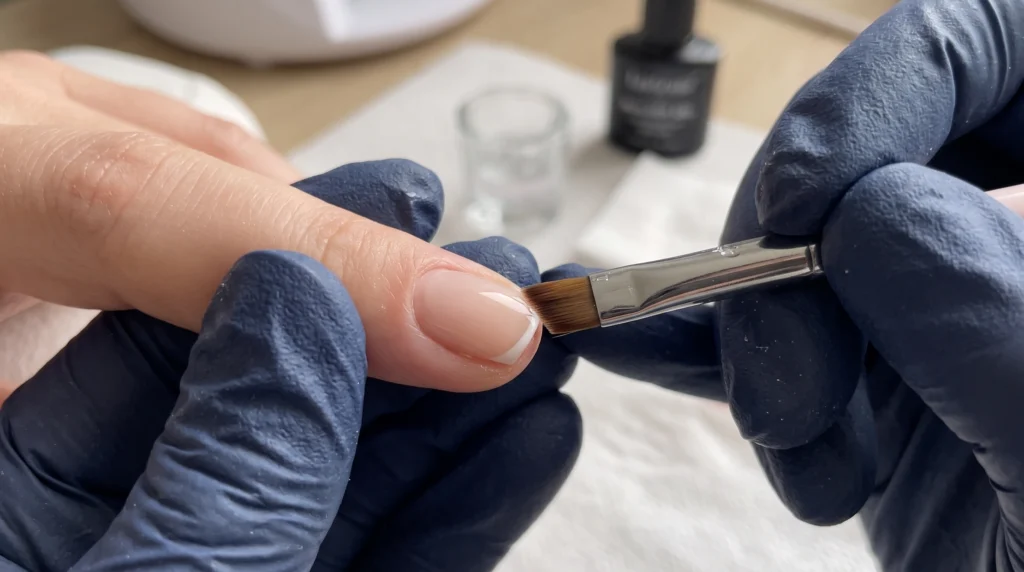
Salon manicurists do not paint perfect lines on the first pass—they carve them with acetone. This “reverse clean-up” technique gives you razor-sharp borders even if your initial stroke wobbled.
- How to do it: Paint your micro French tip slightly thicker than you actually want it. Before curing your gel (or while regular lacquer is still wet), dip a flat, stiff angled brush into pure acetone and dab the excess on a lint-free wipe. Gently glide the angled brush along the lower boundary of the smile line, wiping away excess polish to carve an ultra-crisp arc.
- Why it works on short nails: It takes the pressure off getting a flawless line on the first stroke and ensures the bottom edge of the French tip stays razor-sharp.
Hack 5: The Curved Stencil or Reinforcement Tape Guide
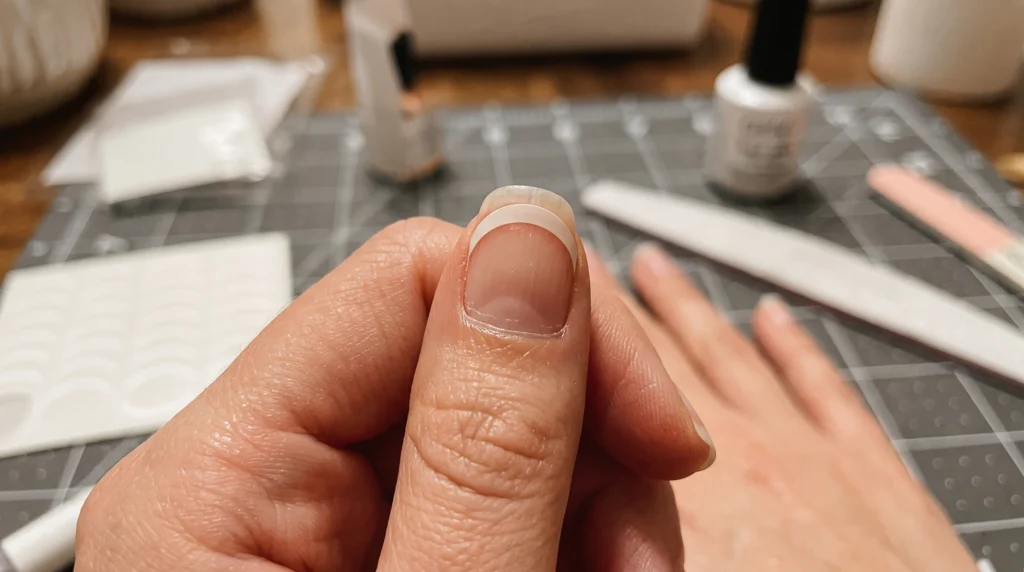
If you don’t have a stamper or detailer brush, household hole-reinforcement stickers or flexible vinyl nail tape make reliable, foolproof stencils for short nail beds.
- How to do it: Ensure your neutral base coat is 100% dry and hardened (or fully cured if using gel). Stick the circular sticker onto the back of your hand first to reduce its tackiness, then apply it across your nail, leaving only a 1mm sliver exposed at the tip. Paint your tip color over the exposed edge, and peel the tape off immediately while the polish is wet.
- Why it works on short nails: The natural curve of a circular binder sticker matches the curvature of squoval and round nail shapes, guaranteeing symmetrical smile lines across both hands.
The 10% Golden Proportion Rule for Short Nails
The number one mistake DIYers make when painting french tips on short nails at home is making the tip too wide. Remember the 10% Golden Rule:
- The Ratio: Your French tip color should never occupy more than 10% to 15% of the total visible nail bed. For example, if your nail plate is 10 millimeters long, your French tip line should be no thicker than 1 millimeter.
- The Free-Edge Seal: Always swipe your clear topcoat horizontally across the raw front edge of your nail. Short nails experience constant friction from typing, texting, and opening cans; sealing the edge prevents water from creeping under the layers and lifting your tips.
- Trend Inspiration: You do not have to stick with stark white polish! Seasonal variations like ghost French tip nails or deep bordeaux arcs from our short black cherry nails guide look modern and tailored on short natural lengths.
Frequently Asked Questions (FAQ)
What nail shape is easiest for French tips on short nails?
A “squoval” shape (straight sidewalls with subtly softened, rounded corners) is the easiest shape to paint. The straight free edge gives you a predictable guideline to anchor your smile line while preserving the structural strength of natural nails.
Why do my DIY French tips peel off short nails so fast?
Short nails peel primarily because the free edge was not properly capped with topcoat, or natural oils remained on the nail plate before painting. Always dehydrate your bare nails with 90% rubbing alcohol and wrap your topcoat over the front edge of each tip to lock in the manicure.
Can you do micro French tips on bitten or extremely short nails?
Yes! Use Hack #3 (the camouflaging BIAB builder gel base). Applying a skin-toned semi-opaque base disguises where your nail bed ends, allowing you to paint a neat micro tip slightly higher up on the fingertip skin line for an instant lengthening effect.
Final Thoughts
Painting clean french tips on short nails at home is all about scale, proportion, and using the right shortcuts. By trading thick bottle brushes for silicone stampers and long-bristle detailers, you can rock a chic, salon-grade micro French manicure that flatters small nail beds and stays chip-free for weeks.