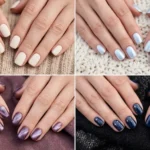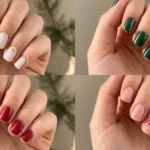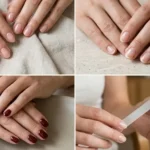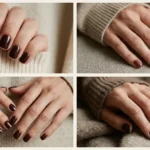
Short Squoval Nails: How to Shape, File & Style the Flattering Soft-Square Look

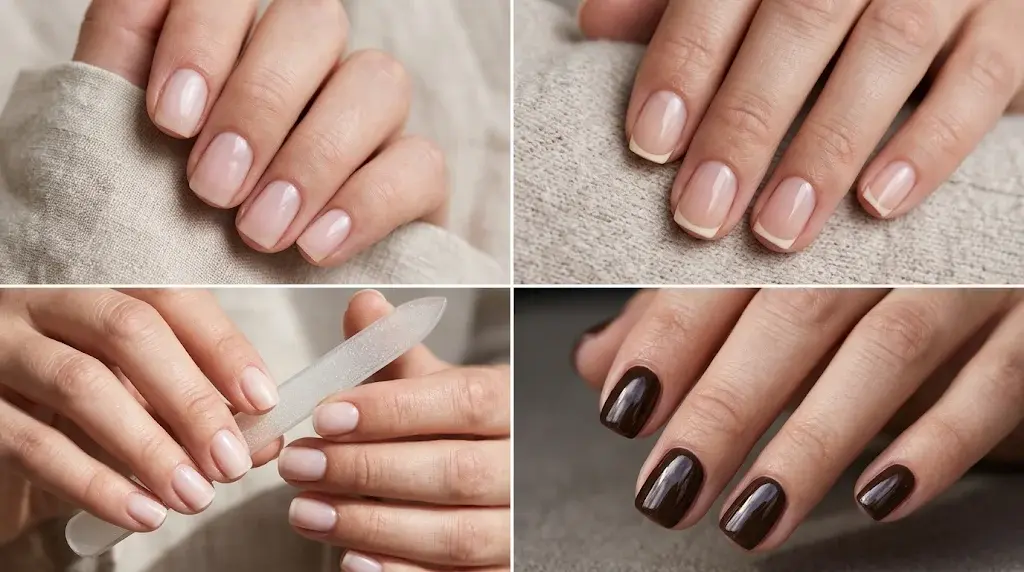
Choosing a nail shape when you keep your length trim often feels like a compromise between durability and elegance. File your tips into a sharp, ninety-degree square, and the corners inevitably snag on knit sweaters or chip while typing. File them completely round, and wide fingers can sometimes look softer or shorter than you want. That exact dilemma is why short squoval nails have become the most requested manicure silhouette in modern salons.
A portmanteau of “square” and “oval,” the squoval shape combines the crisp, horizontal architecture of a flat square tip with the smooth, tapered corner comfort of an oval contour. Even when your free edge extends just one or two millimeters past your fingertip, a well-proportioned squoval profile frames the nail bed cleanly, reinforces weak side walls against splitting, and flatters both petite and broad hands. In this complete salon guide, we cover the structural science behind why squoval tips resist breakage, a step-by-step filing blueprint you can master at home, and six timeless manicure styles tailored for soft-square nails.
The Structural Science: Why Dermatologists and Nail Techs Love Squoval
To understand why the squoval silhouette outperforms almost every other shape on natural nails, you have to look at how keratin absorbs daily physical impact. Your natural nail plate is composed of laminated layers of dead keratinized cells held together by natural lipids and moisture. Along the left and right edges of your finger, the nail plate sits inside grooves called the lateral nail folds, which provide structural support much like the tracks of a sliding door.
When you file a short nail into a pointed or aggressively tapered shape too early, you file away the lower side walls where the nail leaves the finger. Removing that side-wall support weakens the stress zone, causing the tip to bend and peel. Conversely, when you leave razor-sharp square corners sticking out at the edges, every tap against a keyboard or kitchen counter concentrates force onto a tiny point, leading to corner fractures.
The squoval shape preserves 100% of your natural lower side-wall width while beveling off only the vulnerable outer corners. In fact, board-certified dermatologists at the American Academy of Dermatology (AAD) specifically advise trimming fingernails straight across and rounding the tips slightly at the corners to give natural nails maximum mechanical strength.
Short Squoval vs. Square, Round & Almond: Complete Comparison
If you are debating whether to switch from your current shape, this side-by-side technical chart compares how the four primary short nail shapes perform in daily life:
| Nail Shape | Corner Profile | Breakage Resistance | Best Hand & Nail Bed Match |
|---|---|---|---|
| Short Squoval | Flat center horizon with softly beveled outer corners | Highest (full sidewall support with zero sharp snag points) | Universal; flatters wide, narrow, short, and long nail beds alike. |
| Crisp Square | Straight horizontal edge with 90-degree corners | Moderate (corners can chip on thin natural nails) | Long, narrow nail beds with naturally thick keratin (see our short square nail designs). |
| Classic Round | Continuous curved arc following the fingertip contour | High (great for ultra-short or bitten nails) | Short fingers that need a low-maintenance, zero-edge sports length. |
| Soft Almond | Tapered sidewalls meeting at a soft oval peak | Moderate (requires 2mm to 3mm of free edge to taper safely) | Petite or wide fingers seeking maximum vertical elongation (see our short almond nail designs). |
How to File Short Squoval Nails at Home (The 4-Step Salon Blueprint)
The biggest mistake beginners make when attempting a squoval shape at home is over-filing the corners until the flat center edge disappears, accidentally turning the nail into an ordinary round shape. Follow this four-step professional filing sequence to get crisp, symmetrical soft-square tips every single time.
Step 1: Upgrade to a 240-Grit Etched Crystal Glass File
Throw away coarse cardboard emery boards and metal files. Most drugstore emery boards have an aggressive 100-to-150 grit surface designed for thick acrylic plastic; dragging them across natural nails shreds the microscopic keratin layers at the free edge, triggering peeling within days. Instead, use a genuine Czech tempered crystal glass file or a fine 240-grit cushion file. Always shape your nails when they are completely dry, as wet keratin is soft and stretches under friction.
Step 2: Establish the Straight Horizontal Line First
Hold your hand flat with your fingers pointing away from you. Place your glass file perpendicular (flat) against the front tip of the nail and file straight across in smooth, controlled strokes moving from one side to the center. Check that the top horizon is level with your fingertip. Once the initial line looks straight from above, turn your hand over so your palm faces your eyes. Viewing your nails from the palm side eliminates optical illusions caused by crooked fingers and lets you verify that the free edge is truly level.
Step 3: Bevel Only the Outer 15% of Each Corner
Here is the exact geometric secret that separates a true squoval from a round nail: do not touch the middle 70% of your horizontal tip edge again. Tilt your crystal file at a 45-degree angle underneath the left corner where the side wall meets the top edge. Make two to three feather-light upward strokes just to erase the sharp point. Repeat on the right corner with the exact same number of strokes. You want a flat tabletop across the center that melts gently into curved shoulders at the sides.
Step 4: Frame the Base with Clean Cuticle Prep
A squoval tip looks twice as tailored when the base of the nail mirrors its soft, rounded-square geometry. Because the proximal nail fold at the base of your finger naturally forms a gentle U-shape, clearing away dead overgrown tissue creates visual harmony between the top and bottom of your nail plate. Before painting, follow our dermatologist-backed routine for gentle cuticle care for short nail beds to expose up to two millimeters of hidden natural length.
6 Iconic Manicure Styles That Look Best on Short Squoval Nails
Because the squoval silhouette offers both a straight horizontal tip and gently curved corners, it adapts effortlessly to minimalist sheer overlays, dark editorial tones, and precision line art. Below are six signature ways to style your soft-square manicure.
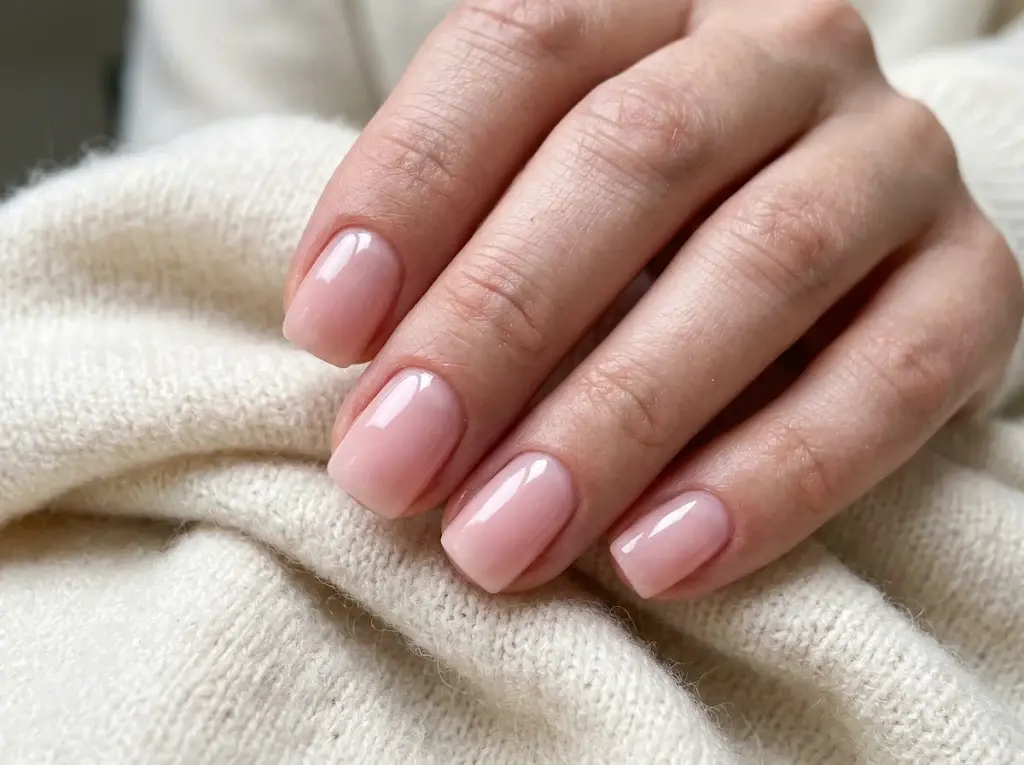
1. Sheer Milky Pink Structured BIAB (“Clean Girl” Squoval)
Nothing highlights the clean, athletic elegance of a short squoval nail better than a semi-sheer milky pink builder gel overlay. When applied over a neatly filed soft-square tip, the self-leveling gel fills in natural surface ridges and creates a plump, cushiony reflection that looks like naturally blessed keratin.
Why this pairing works: Short squoval nails already have strong lateral side walls, and adding a thin structural layer of BIAB prevents the softened corners from bending when wet. If you want to transition from regular polish to structured overlays, explore our complete salon guide to builder gel (BIAB) on short nails.
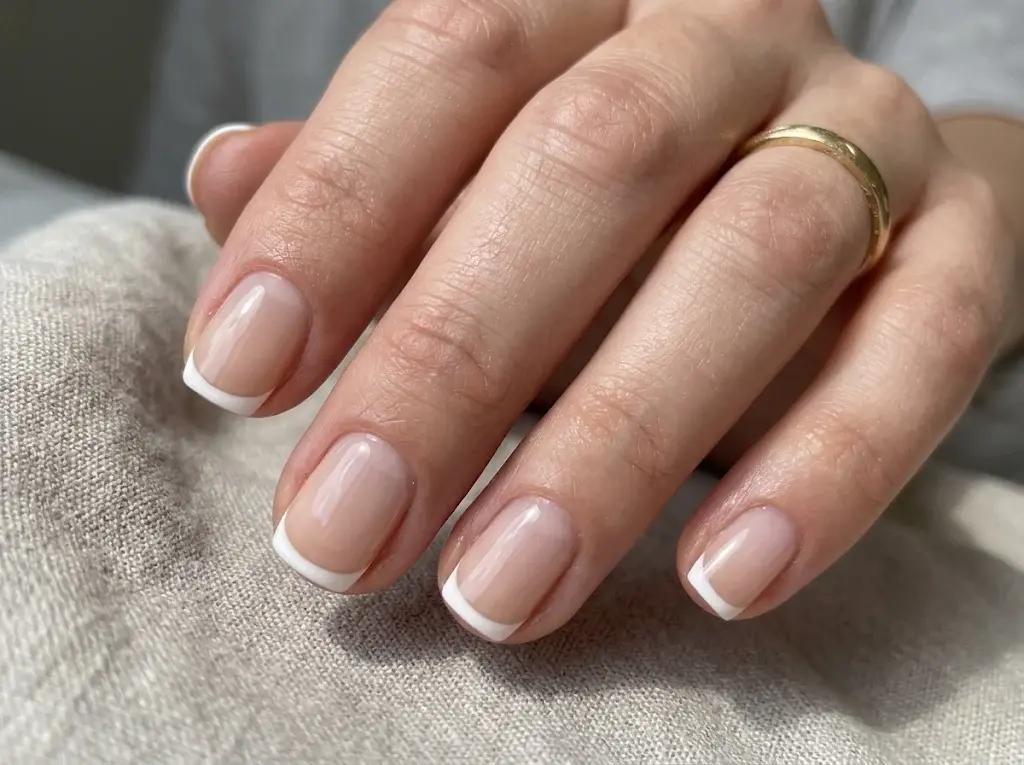
2. Tapered Micro French Tips Following the Squoval Shoulder
Traditional thick white French tips often look blocky on short nails because a wide horizontal band visually chops the nail plate in half. On a short squoval nail, however, a whisper-thin micro French line under one millimeter thick looks remarkably refined because the smile line follows the flat center horizon and tapers delicately into the rounded corners.
Salon styling trick: Ask your technician to keep the center of the French line razor-thin while pulling the side “ears” of the smile line slightly deeper along the rounded corners. This subtle curve mimics the natural contour of your fingertip and creates an instant lengthening illusion. You can also replicate this look yourself using our 5 easy micro French tip hacks for short nails at home.
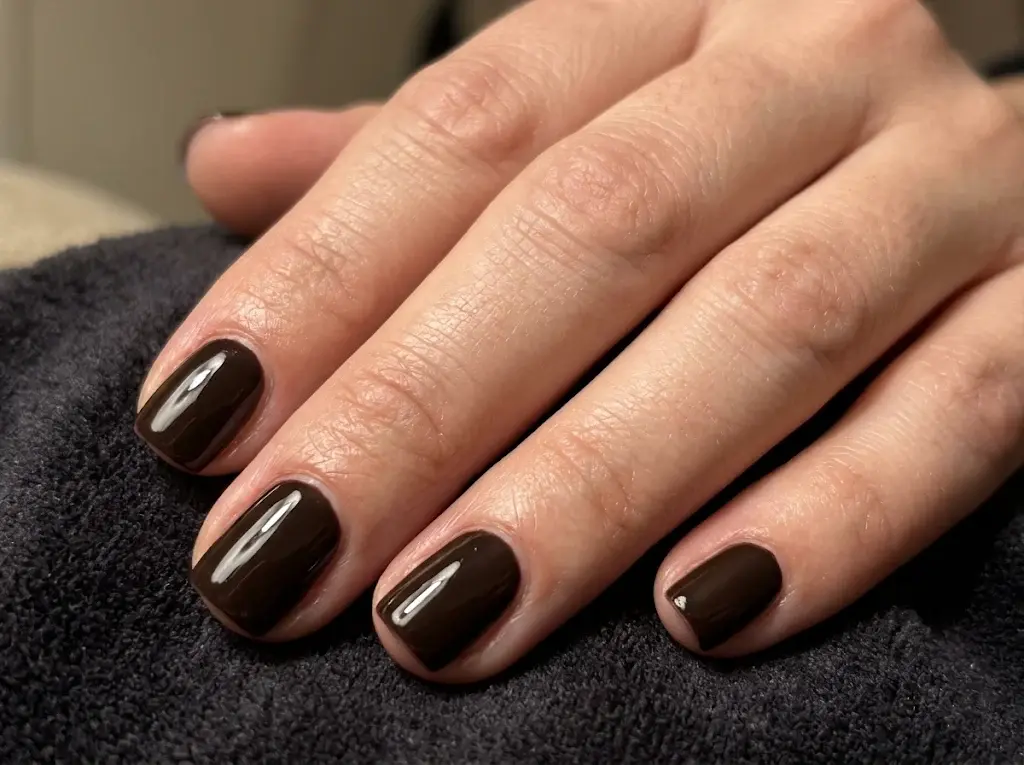
3. High-Gloss Dark Roast Espresso on Soft-Square Tips
Dark, moody polishes demand impeccable shaping. On round nails, very dark shades can sometimes look like tiny dots on the fingers, while on sharp square nails, dark pigment emphasizes every minor corner chip. A short squoval shape provides the crisp, structured border that deep roasted coffee and dark chocolate shades need to look intentional and high-fashion.
Application tip: Leave a hair-thin 0.5mm unpainted margin along both lateral side walls when applying dark lacquer. This invisible negative-space border slims broad nail plates and keeps the cuticle line looking razor-sharp. For more dark seasonal inspiration, browse our curated lookbook of rich espresso and chocolate brown short nails.
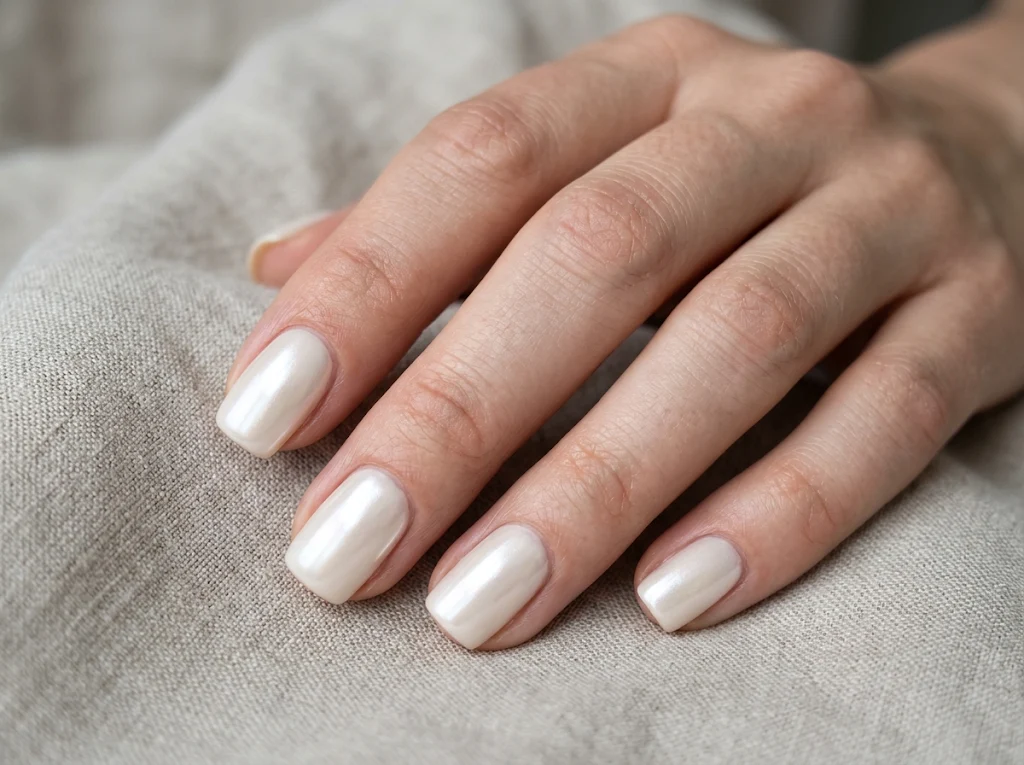
4. Glazed Oat Milk & Pearl Chrome Squovals
Reflective chrome powders interact differently with each nail shape. On pointed or almond nails, light gathers into a narrow needle-like stripe down the center. On the flatter, broader surface of a short squoval nail, pearl and champagne chrome powders cast a wide, satin-like glow across the entire nail plate.
How to wear it: Start with an opaque oat-milk white or warm vanilla beige gel base, cure a non-wipe topcoat for 30 seconds, and buff a sheer aurora pearl powder across the surface. The softened squoval corners prevent the chrome topcoat from wearing off prematurely at the edges.
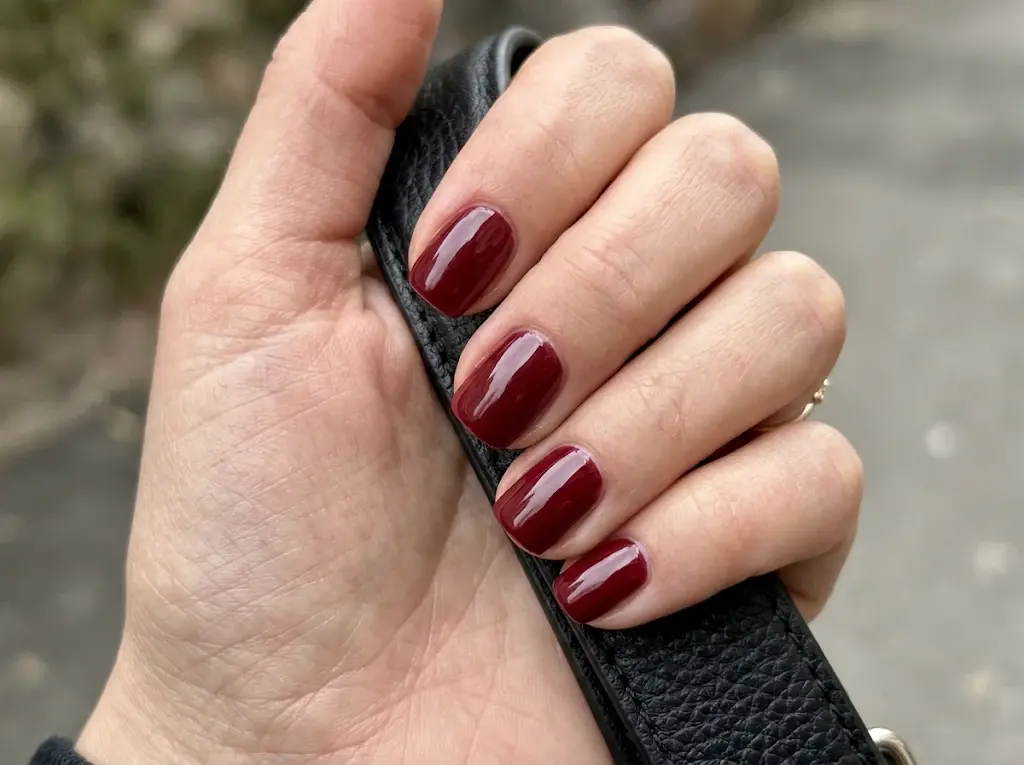
5. Parisian Wine Red & Merlot Classic Squoval
If you look at classic French beauty editorials, models almost never wear long extensions with red polish; instead, they pair deep merlot, oxblood, or crimson lacquer with trim, neatly rounded-square natural nails. As noted in professional salon trend reports by Pure Nails UK, soft square and squoval shapes remain the top choice for clients who want a timeless, practical manicure that transitions effortlessly from office keyboards to evening dinners.
Undertone advice: Blue-based crimson and deep burgundy shades make the skin on your hands look brighter and more even-toned during colder months, while the soft corners keep bold red pigment looking understated rather than aggressive.
6. Minimalist Negative-Space Cuticle Cuffs & Corner Accents
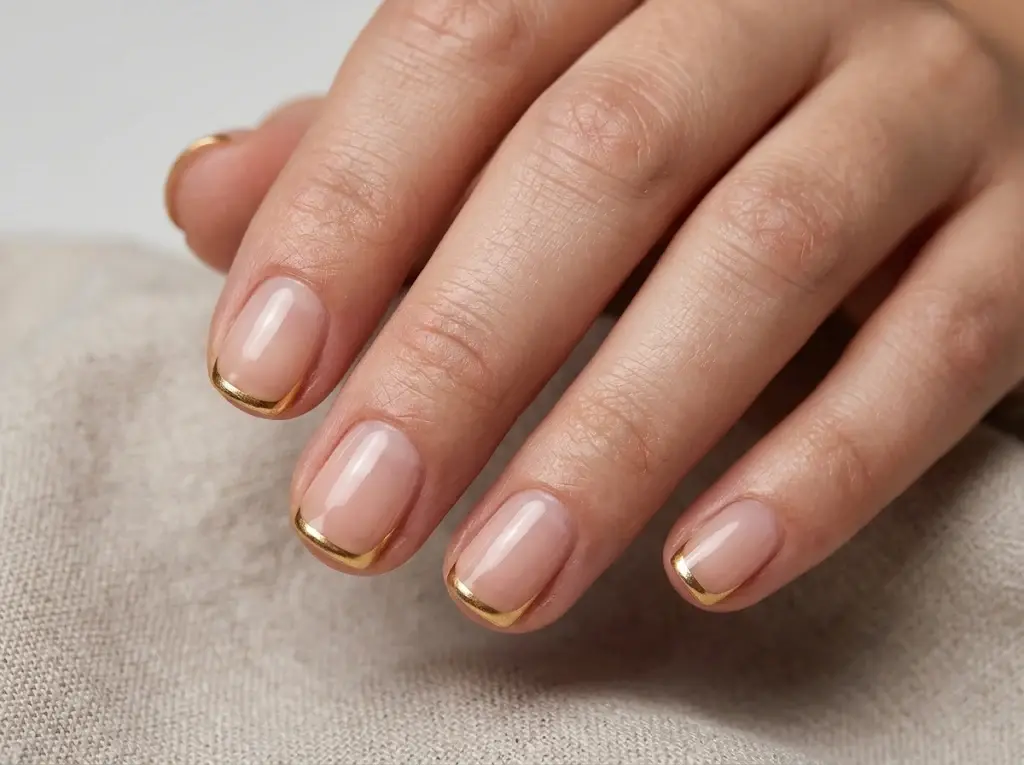
Because the squoval shape has a defined architectural geometry, minimalist line art that echoes its soft corners looks effortlessly cohesive. Instead of painting the entire nail, apply a crystal-clear or sheer blush base coat and trace a delicate metallic gold or espresso crescent along one lower corner or along the cuticle curve.
Why it flatters short nails: Keeping 85% of the natural nail plate bare and glossy tricks the eye into reading the entire fingertip as uninterrupted length, while the subtle corner accent celebrates the soft-square outline.
How to Customize the Squoval Taper for Your Exact Nail Bed Type
While the squoval shape is universally flattering, subtle adjustments to how much you bevel the corners can transform how your fingers look. Use this custom proportion guide to tailor the shape to your natural anatomy:
| Your Natural Nail Bed Type | How to Adjust the Squoval Shape | Visual Result |
|---|---|---|
| Wide or Short Nail Beds | Bevel the outer 20% of the corners slightly more and taper the upper 2mm of the sidewalls inward by a fraction of a millimeter. | Reduces horizontal bulk and guides the eye vertically down the center of the finger. |
| Narrow or Petite Nail Beds | Keep the horizontal center edge wider (80% flat) with only a minimal 10% softening on the very tips of the corners. | Gives slender nail plates healthy structural presence without looking pinched. |
| Fan-Shaped (Flared) Nails | Hold the file completely parallel to the side walls first to straighten outward flare before beveling the top corners. | Corrects wide, triangular tip growth so the manicure looks sleek and parallel. |
| Curved or Hooked Nails | File the straight edge while looking from the side profile, slightly lifting the downward-curving corners. | Creates a straight, uplifted upper horizon that prevents corners from curling inward. |
If your primary goal is creating maximum vertical illusion on petite hands, combine these custom filing proportions with the optical color strategies in our guide on how to make short nails look longer.
5 Salon Rules to Keep Short Squoval Nails From Losing Their Shape
Because you use the outer corners of your index and middle fingers more heavily when typing, texting, and opening packages, squoval nails can gradually wear down asymmetrically between manicures. Follow these five maintenance habits to keep all ten nails uniform:
- Do a 30-Second Mid-Week Glass File Touch-Up: Every five to seven days, lightly glide a 240-grit crystal file across the straight center edge (even over cured gel, followed by a dab of clear topcoat if needed) to keep natural tip wear even.
- Never Use Your Nail Corners as Tools: Prying open soda cans, peeling shipping labels, or scraping stickers with the corner of your index finger will shear off the beveled edge and cause diagonal splits.
- Cap the Corner Shoulders With Topcoat: When painting your nails at home, do not just swipe the brush across the center of the tip; sweep the brush around the left and right beveled corners to seal the areas of highest friction.
- File in One Controlled Direction on Corners: Sawing back and forth aggressively on the delicate corner transition heats up the keratin and creates micro-splits. Use smooth, single-direction strokes from the side wall toward the center.
- Hydrate the Lateral Nail Folds Daily: Dry, hardened skin along the sides of your nails makes squoval tips look narrower and rougher. Massage a drop of pure jojoba oil into the side grooves every evening.
Frequently Asked Questions
How much length do I need to file my nails into a squoval shape?
You need very little free edge to achieve a clean squoval shape. As soon as your white free edge grows 1 to 1.5 millimeters past the pink nail bed (roughly flush with or slightly past your fleshy fingertip), you have enough structure to file a flat center horizon and softly bevel the outer corners.
What do I tell my nail technician if I want short squoval nails?
Ask specifically for “short natural length, filed straight across the top with softly rounded corners, not fully round.” Showing a reference photo is always helpful, as some technicians hear “rounded square” and accidentally file the entire tip into a curved oval arc.
Are short squoval nails stronger than round or almond nails?
Yes. On short natural nails, squoval is structurally the strongest shape because it leaves the lower lateral side walls completely intact where the nail emerges from the finger, while eliminating the sharp 90-degree corners that cause square nails to catch and tear.
Do short squoval nails make chubby or short fingers look shorter?
Not when proportioned properly. While a wide, sharp square tip can emphasize finger width, beveling the outer corners of a squoval nail softens the horizontal line and allows skin-tone nudes, micro French tips, or glossy dark shades to elongate the finger vertically.
Can I get short squoval nails with press-ons or soft gel tips?
Absolutely. Most modern extra-short press-on sets and soft gel extensions come pre-molded in a short squoval contour because it fits the widest range of natural cuticle beds and feels comfortable for everyday typing.